
Donut Lab’s Solid-State Battery Could be the Most Significant Product I’ve Ever Covered at CES
Or it could be nothing but hype.

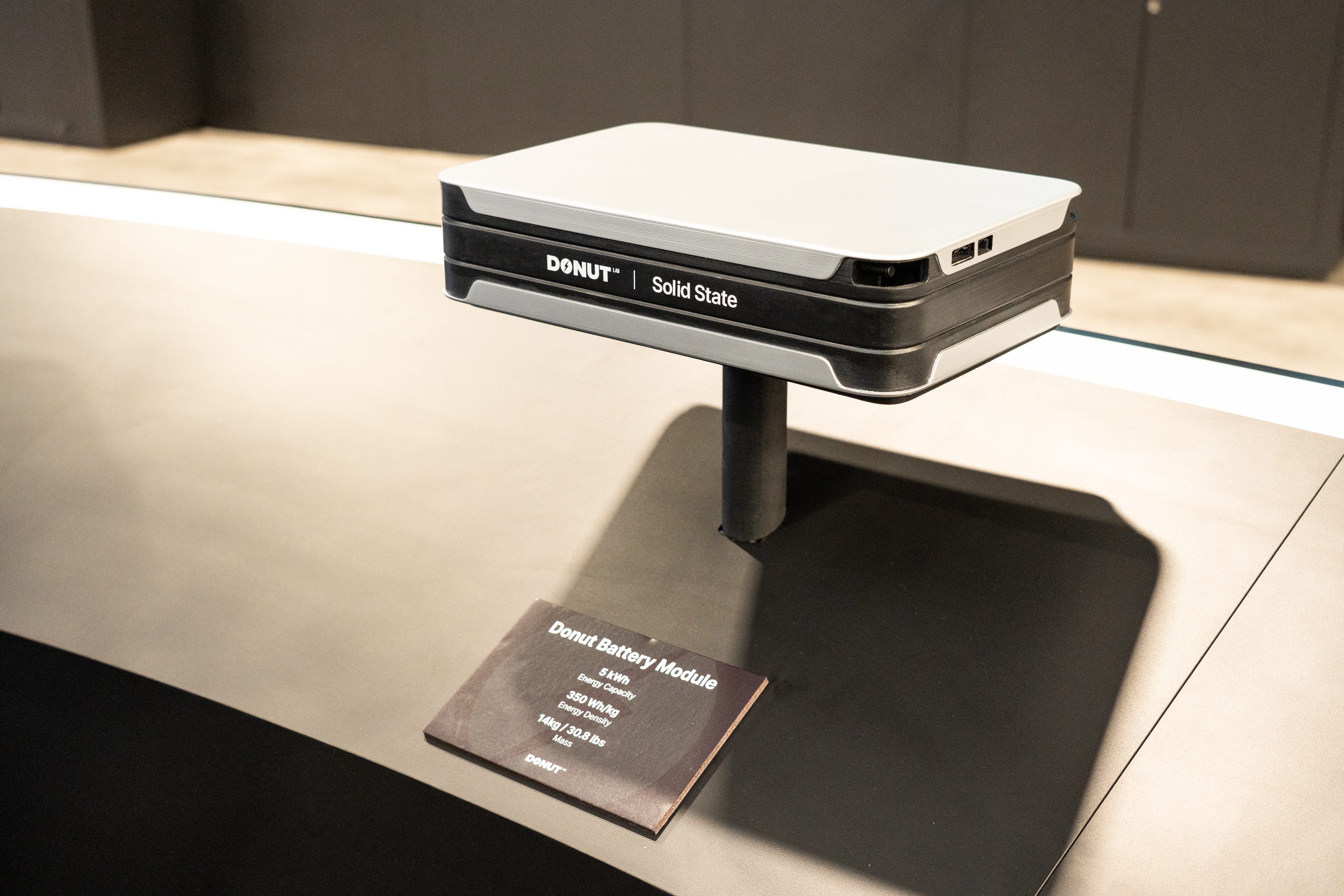
Good morning, dear reader. I’ve been back from Las Vegas for a few days now, enough time to start the process of catching up on missed sleep and hydration, not to mention re-integrating myself into the peaceful solitude of my woods and away from the culture crush that is CES.
I’ve been going to the Consumer Electronics Show for getting on toward 20 years now, and while it’s always a marathon, it’s also interesting to watch the ebbs and flows of various segments of the industry. When I first started going, there was nary any automotive stuff there at all. Then we got a big rush thanks largely to Ford with Sync and, later, the Focus Electric.
This year was honestly a little quiet on the automotive front, as robotics and AI pretty well swept everything else off the many show floors. But, there was certainly plenty enough to keep me busy. Here are a few highlights.
Start of the solid state?
I’ve been pitched so many times by so many companies promising they’ve cracked the code on solid-state batteries that I confess I kind of tune them out at this point. The technology would replace traditional battery electrolytes with something more resilient. Removing the literal juice promises to dramatically increase the figurative juice that a given battery can store, meaning way more range for a battery of a given size and weight, plus huge increases in charging speed and overall thermal stability.
They would, then, completely change the game for EVs, creating cars that could go upwards of 500 or 1,000 miles on a single five-minute charge. It’s been promised so many times by so many companies over the years that, when Donut Lab said it had figured out how to make the things, I confess I kinda didn’t pay it much heed. It was only when my editors at The Verge asked me to go check it out for them that I took the time to look into it.
I went over to the Donut Lab booth (which grows every year), spoke with its co-founder and CEO Marko Lehtimaki, and was blown away. If the numbers Lehtimaki told me are true, then this could finally be the EV revolution that’s been promised for so many years. There’s reason for skepticism, because the company is being coy on many of the details. Patents are pending, as is third-party testing to verify all the company’s wild claims. However, unlike the various solid-state hucksters over the years promising results at some indeterminate future if they can raise enough funding, Lehtimaki says all will be revealed within weeks.
I’m cautiously optimistic, but suffice it to say you should stay tuned for lots more on this topic coming soon from yours truly.
Longbow’s lovely, lightweight EV
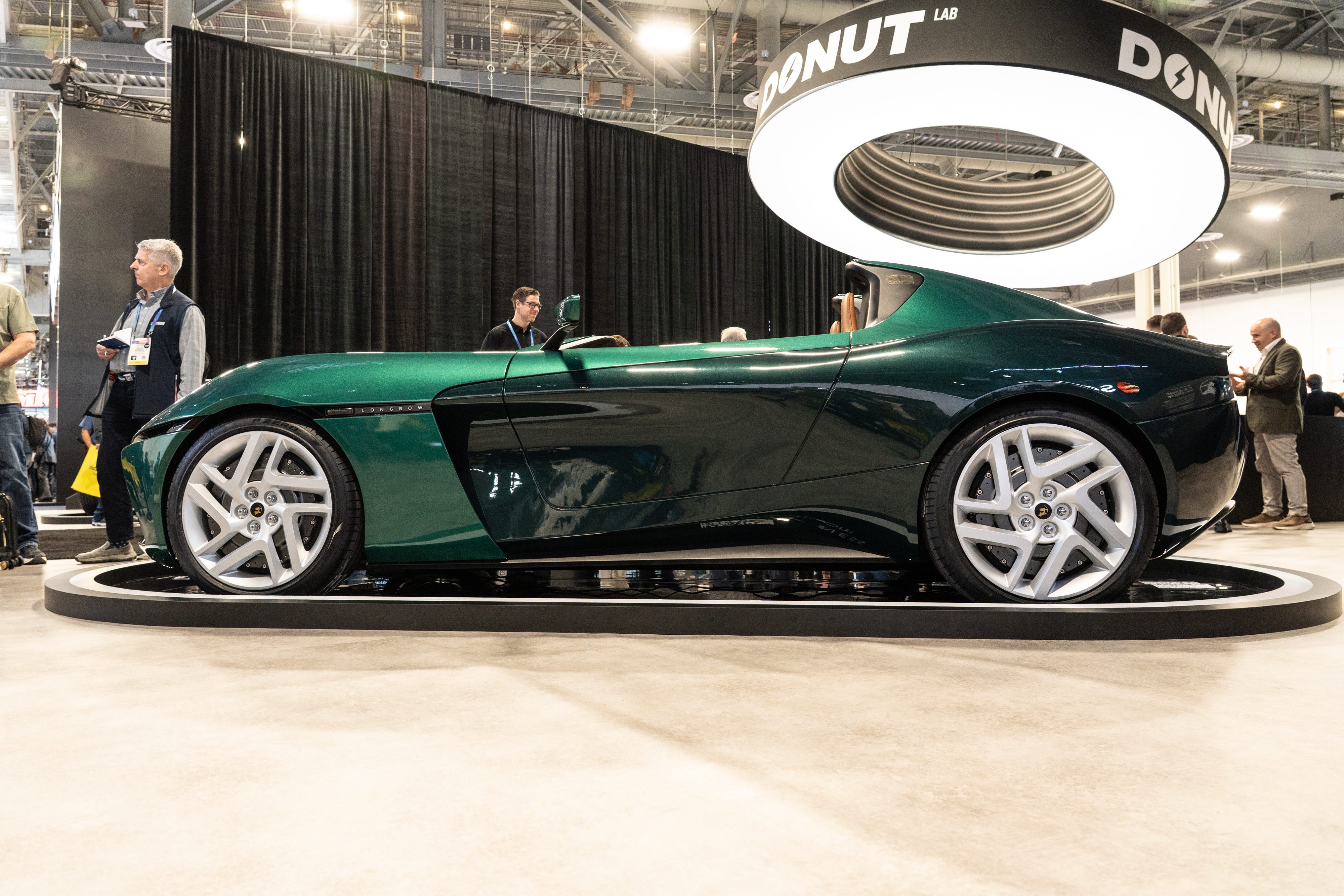
While I wasn’t paying the solid-state stuff much heed initially, I had a visit by the Donut Lab booth on my docket for CES this year. I wanted to run by and check out the Longbow Motors Speedster. This little, open-topped EV was compelling for a few reasons, primary among them being weight: It’s promised to weigh somewhere around 2,200 pounds, or more than 100 pounds less than a Mazda Miata.
Is that possible? Again, we won’t know for sure until the company builds a production-ready version and rolls the thing onto a scale. But it’s conceptually feasible when you’re talking a purpose-built machine with a very small battery. That battery isn’t solid state, at least not yet, but it is using Donut Lab in-wheel motors. I was skeptical about the inclusion of those, too, thanks to the dreaded unsprung mass concern. But Longbow’s founders were quite convincing on that topic, which you can read about at Engadget.
I’m still not feeling Afeela
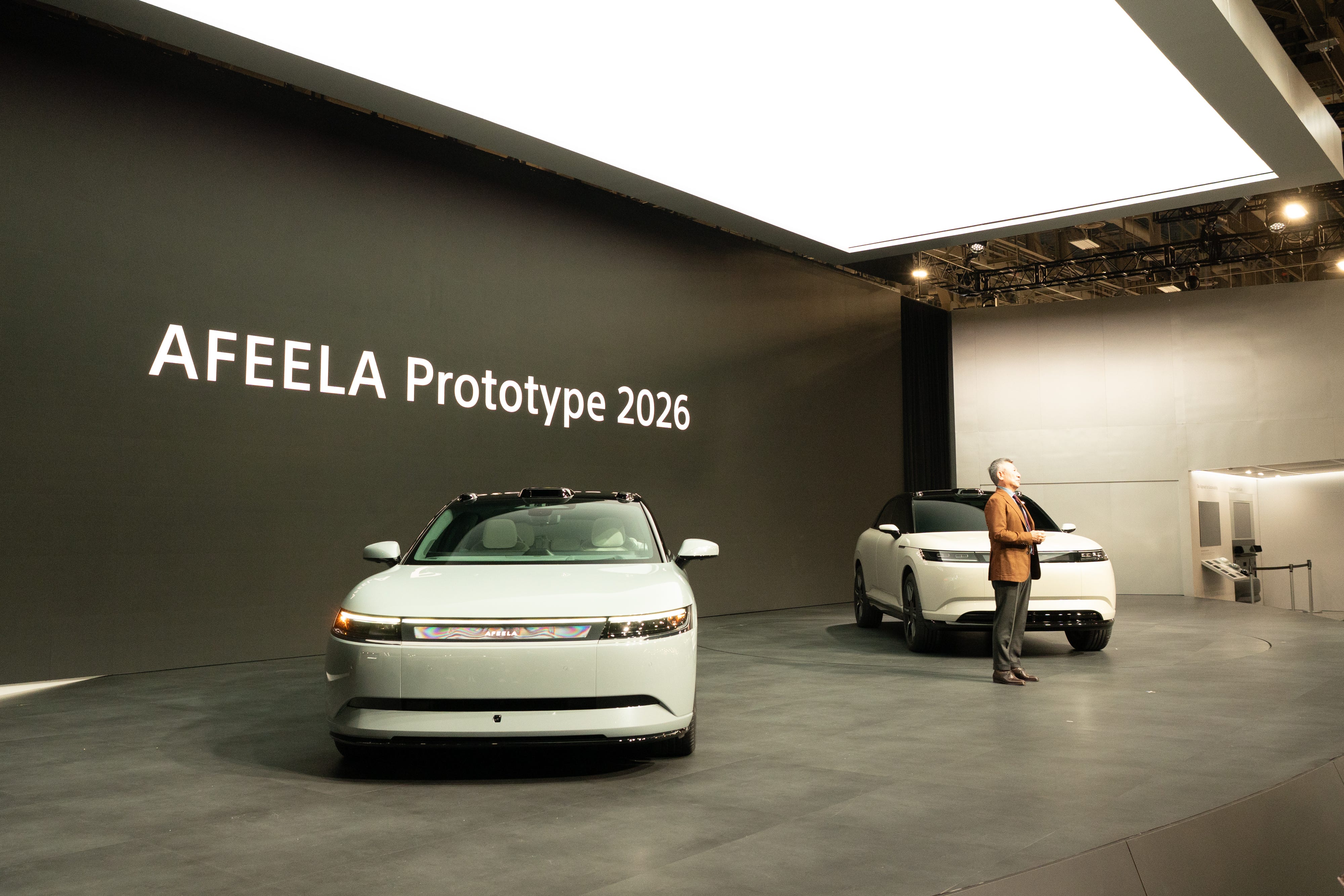
Sony’s Afeela 1 got a sibling at this year’s CES, the cunningly titled Afeela Prototype 2026. It is, basically, an SUV version of the sedan that has, in one form or another, been kicking around CES since 2020. It’s safe to say everyone at the show is pretty sick of seeing the thing at this point, which hasn’t really changed substantially in those years and yet is still about a year away from extremely limited production.
The SUV? That’s even farther down the road, not entering production until 2028 at the earliest. The tech is moderately compelling, and the experience could be fun, but the fundamental range, power, and cost just don’t line up. The longer it takes for this $90,000-and-up EV to come to market, the less it makes sense.
AI on a boat
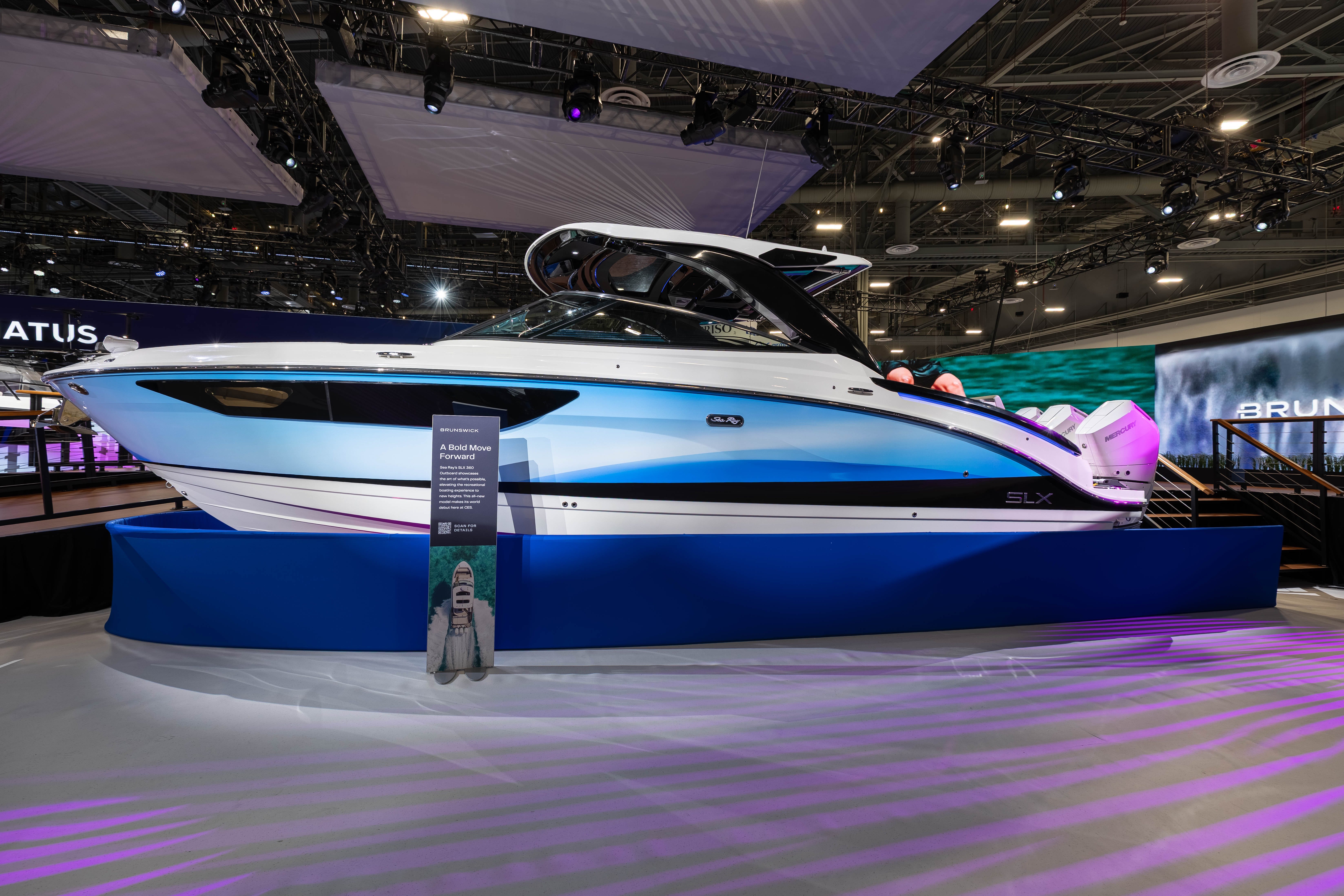
Finally from CES this week, I did my first boat reporting. Yes, AI was everywhere at CES, even at sea. I swung by the Brunswick booth to check out boats that not only have enough onboard compute power to run a large language model on the edge, but also offer onboard power distribution systems conceptually similar to what you’ll find in a smart home with solar generation. They’re even self-docking. It’s enough to make a kayaker like myself think about upgrading... at least, it was until I saw the prices.
Those are the highlights from CES for me. I have a few more pieces that’ll pop up in a in the weeks ahead, too, which I’ll share in due time. Until then, I’m looking forward to a week at home to recharge my own batteries before heading out on the road again. Volvo’s got a new SUV to launch in Sweden, and I’ll be there.
Until then, be well, do good, and stay warm.
Let's hope it's real and can make it into scalable production! Thanks for the info. :)
1,000 miles on a 5 minute charge would requires somewhere around 3.4MW to charge which is no where near what is presently capable of any charger. Which current chargers, it would be closer to 50 minutes as best. But who cares. No one can drive 1,000 miles in a day so you would charge over night.